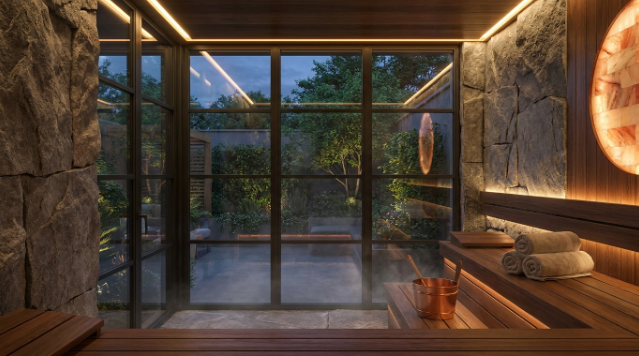
A traditional sauna heats the room with an electric or wood-fired heater and stones, reaching 150 to 190 degrees Fahrenheit air temperature, while an infrared cabin uses carbon or ceramic panels to warm the body more directly at a lower air temperature of roughly 120 to 140 degrees. Traditional units need a dedicated 240-volt circuit and generally cost more to install; infrared cabins often run on a standard 120-volt outlet and heat up faster. The right choice depends on which kind of heat someone actually wants and what the electrical situation at home allows.
How Does the Heat Itself Feel Different?
Traditional sauna heat works by warming the air, which then transfers heat to the body through convection and conducts through direct contact with hot benches and stones. It is intense, and pouring water over the stones (löyly) adds a burst of humidity that sharpens the sensation. Infrared heat works differently: the panels emit radiant energy that penetrates and warms tissue somewhat more directly, while the surrounding air stays noticeably cooler. Regular sauna users often describe traditional heat as more immersive and intense, while infrared users describe a gentler, more sustained warmth they can tolerate for longer single sessions. Humidity is another point of difference: a traditional cabin can swing from dry to steamy the moment water hits the stones, while an infrared cabin stays dry throughout, which some users prefer if they find high humidity harder to tolerate for a full session.
What Does Installation Actually Involve for Each?
A traditional heater above roughly 3 kilowatts, which covers most home-sized units, needs a dedicated 240-volt circuit sized to the heater’s nameplate amperage and installed by a licensed electrician, plus a heater listed to UL 875 for dry-bath heating equipment. Most infrared panel systems, by contrast, run on a standard 120-volt household outlet, which removes one of the more expensive line items in a traditional build and makes infrared a realistic option in spaces where running new 240-volt wiring is difficult, like a finished basement far from the panel or an apartment patio. Both cabin types still need a foil vapor barrier behind the interior paneling and, for outdoor placement, a level pad and weatherproof exterior cladding, so the installation gap between the two is really about the electrical work rather than the carpentry.
How Do Operating Costs Compare?
Infrared panels use less total wattage than a comparable-sized traditional heater and reach usable temperature faster, both of which tend to lower the electricity cost per session. A traditional heater in the 6 kilowatt range run for a full warm-up and session draws meaningfully more power than an infrared system rated around 1.5 to 2 kilowatts running for a similar session length, even accounting for the shorter infrared heat-up time. Over months of regular use, that difference shows up on the electric bill, though it is rarely dramatic enough on its own to decide the purchase.
What Does the Research Actually Cover?
The bulk of peer-reviewed sauna research, including large Finnish cohort studies and systematic reviews of the evidence, examines traditional dry sauna bathing rather than infrared cabins specifically. A review in Mayo Clinic Proceedings summarizing the cardiovascular and other health evidence, and a separate systematic review of clinical effects from regular dry sauna use, both describe associations built on traditional heat exposure at the temperatures and frequencies typical of Finnish sauna culture. Infrared technology is newer and has a smaller, less extensive body of independent research behind it, which does not mean it lacks benefit, but it does mean buyers should not assume the traditional-sauna evidence transfers directly to infrared use at a different temperature and heating mechanism.
Which Fits a Luxury Backyard or Home Build Better?
Traditional cabins, especially barrel and cabin-style builds with cedar or heat-treated hemlock interiors, tend to read as the more classic luxury statement, and they support higher-heat rituals like löyly that many buyers associate with an authentic sauna experience. Infrared cabins fit well into spaces where a 240-volt circuit is impractical or where someone wants a gentler daily session without committing to a long warm-up. Some premium builds now offer hybrid units combining both technologies, letting the user choose either infrared panels or a traditional heater with stones in the same cabin, which is worth asking about directly if flexibility matters more than picking one path permanently. Panoramic glass fronts, LED accent lighting, and built-in sound systems show up on both traditional and infrared luxury models now, so those extras are not a reliable way to tell the two heating types apart when comparing listings; the heater type and voltage requirement are the specs that actually distinguish them.
What Should Guide the Final Decision?
Budget for electrical work, available voltage, how much heat intensity someone actually enjoys, and session length preference all matter more here than any single spec sheet number. A household that already has 240-volt service nearby and wants the classic high-heat experience is usually well served by a traditional cabin; a household without easy access to that circuit, or one that wants faster daily use without a long warm-up, often leans infrared instead. Families who plan to use the cabin daily rather than a few times a week sometimes favor infrared purely on convenience, since a 10 to 15 minute heat-up removes the friction that keeps a longer warm-up from becoming a habit on a busy weeknight. Reviewing detailed spec sheets for both categories side by side, including heater wattage, voltage requirements, and interior materials, at a retailer like Sweat Decks is a reasonable next step once the electrical and comfort preferences are settled.
Frequently Asked Questions
What is the main difference between traditional and infrared sauna heat? Traditional heats the air to 150 to 190 degrees using stones. Infrared uses carbon or ceramic panels for more direct radiant heat at a lower air temperature of 120 to 140 degrees.
Does an infrared sauna need a 240-volt circuit like a traditional one? Most infrared cabins run on a standard 120-volt outlet. Traditional heaters above about 3 kilowatts need a dedicated 240-volt circuit.
Is infrared heat lower EMF than a traditional sauna? Quality infrared panels publish low-EMF ratings, though traditional electric heaters also produce some EMF from their heating elements. The exposure profile differs by technology.
Which type takes longer to heat up? Traditional units typically take 20 to 45 minutes. Infrared cabins usually reach usable temperature in 10 to 15 minutes.
References
- Effects of heat and cold on health, with special reference to Finnish sauna bathing, American Journal of Physiology, 2018
- Does the Combination of Finnish Sauna Bathing and Other Lifestyle Factors Confer Additional Health Benefits? A Review of the Evidence, Mayo Clinic Proceedings, 2023
- Cardiovascular and Other Health Benefits of Sauna Bathing: A Review of the Evidence, Mayo Clinic Proceedings, 2018
- UL safety standards for dry-heat bathing equipment
By Colleen Marsh