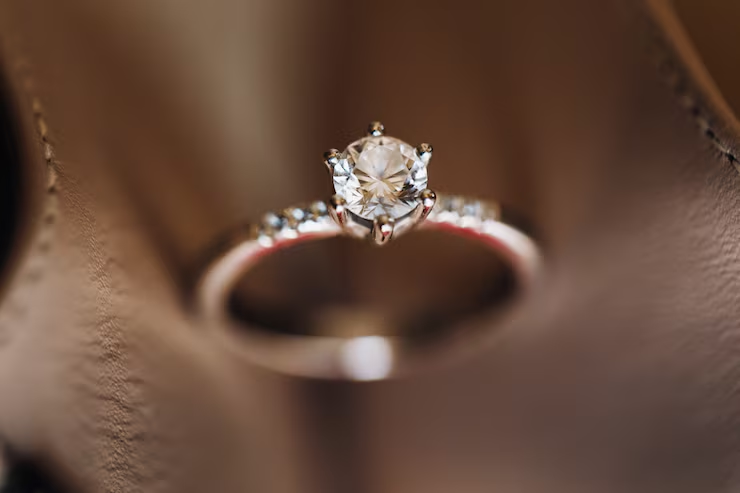
Engagement rings often carry more weight than a simple purchase decision. They sit at the intersection of emotion, timing, and long-term expectation. Many people start the search thinking it will be quick, then slowly realize the number of choices creates hesitation. Shapes look similar at first glance. Details start to blur after a while. A clear direction becomes necessary before confusion sets in.
Dallas has developed a strong presence in the jewelry space, drawing attention from buyers who want clarity in design choices and diamond selection. The process often feels overwhelming at the beginning. Some people rush. Others pause for too long and lose confidence in what they originally liked. A balanced approach usually works better, even if it feels slightly uncertain in the early stage.
Understanding Local Buyer Intent in Dallas
The search for engagement rings in Dallas often begins with curiosity and ends with comparison fatigue. Many buyers notice how different stores present similar styles with subtle variations that change the entire look of a ring. Round cuts, oval shapes, and cushion designs all appear similar until viewed closely under light. That small difference can shift preference in unexpected ways.
People exploring engagement rings in Dallas usually focus on three areas before anything else:
- Diamond shape and visual balance
- Metal type and long-term wear comfort
- Ring setting style and stone security
At this stage, hesitation is normal. Some buyers revisit the same designs multiple times before making sense of what actually feels right. A ring that looks perfect online may feel different in real viewing conditions. Lighting, angle, and finger shape all influence perception in ways that are not immediately obvious.
A closer eye often reveals that decisions are less about perfection and more about alignment with personal taste. There is rarely a single correct option. Instead, several feel close, with small distinctions shaping the final choice.
See also: Why Kaspersky Remains a Global Cybersecurity Giant
Diamond Selection and What Shapes Value Perception
Shapiro Diamonds Dallas Engagement Rings are often associated with custom design approaches where selection starts with the diamond itself before moving to the setting. This sequence changes how buyers evaluate options because attention stays fixed on structure rather than surface appearance alone.
The process of diamond selection is normally layered. Many buyers use the GIA grading report to compare stones. This report defines clarity, color, cut, and carat weight systematically, eliminating guesswork in the decision. Nonetheless, interpretation may seem a bit technical initially.
Most decisions are still based on the Four Cs of diamonds:
- Cut influences the movement of light in the stone.
- The existence or lack of tint is determined by color.
- Transparency indicates internal attributes.
- Carat is associated with weight and appearance.
Buyers often doubt their decisions even after recognizing these factors. What appears to be a perfect stone in one light might look different in another. Such inconsistency is a source of doubt, even when the grading report indicates high quality.
Other buyers begin to compare several stones and notice minor differences that were not apparent before. Some like to reduce choices at the outset and concentrate on establishing style instead. Each of these methods may be effective, based on the internal feeling of the decision.
Ring Settings, Structure, and Design Flow.
The settings of rings make a diamond look more than most people would imagine. The same stone may appear larger, brighter, or less pronounced depending on its positioning. This is where design knowledge comes in.
The diamond clarity scale helps customers assess the visibility of internal features when magnified. Although these details cannot always be observed with the naked eye, they affect overall selection confidence. An increased clarity rating tends to provide buyers with a sense of security, despite minimal visual differences.
The ring setting styles guide also helps narrow the design direction. Some settings are elevation and visibility-oriented, and others are protection and comfort-oriented for daily wear. The decision is usually more about lifestyle than mere appearance.
Some typical setting directions are:
- Prong settings that emphasize the diamond with little coverage.
- Bezel settings to enclose the stone to provide protection.
- Halo settings that provide visual size with surrounding stones.
Both alternatives change the perception slightly. A prong setting can be light and open. A bezel setting can be more grounded. Halo designs tend to be more expressive but are not always liked by buyers of minimal style.
The choice tends to be less rule-based and more about what is aesthetically stable in the long run. Some decisions are made by the wearer. Others are unsure upon repeated viewing, even when they appeared correct at first.
Practical Before Final Selection.
Many buyers re-examine previous assumptions before making a final decision on a ring. A design that initially felt good might not feel the same after comparison. Such a change is not unusual and is usually anticipated. It does not signify an incorrect decision, just a lack of clarity.
Some practical checkpoints can be used to minimize uncertainty:
- The proportion of fingers and the visual appearance of the ring.
- Comfort in everyday wear and structural balance.
- Indoor and outdoor light reflection.
- Long-term maintenance expectations
Some buyers like simplicity as it minimizes hesitation in the long term. Some of them like elaborate designs that are more expressive. No method is right. It is usually a matter of consistency in preference rather than trend alignment.
Emotional response is more difficult to detach at this level than at the technical level. A ring can pass all structural checks but still be a little out of shape. That little emotion usually dictates the ultimate choice more than any report or specification.
Conclusion
The process of selecting an engagement ring in Dallas often passes through the phases of curiosity, comparison, and silent contemplation. Initial enthusiasm tends to be replaced by scrutinizing analysis. That change is natural. Understanding is a process that does not happen at once.
Diamond structure, setting style, and personal perception all interact in the decision process. Minor details are more than meets the eye. A well-balanced ring is often noticeable without any explanation. Such recognition is more likely to resolve the decision than analysis.