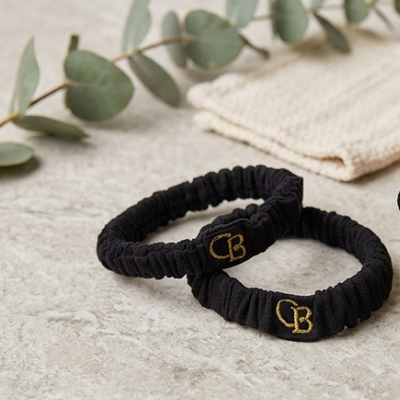
Plastic-free hair ties have moved from a fringe idea to a small but real product category, and Ciao Bella is one of the names that comes up when people talk about it. The shift is worth understanding on its own terms, because it says something about how ordinary, overlooked products get reinvented.
Brands like Ciao Bella tend to share a familiar shape, whether or not you ever buy from one. Most are small and founder-led. Many are women-owned. And nearly all are built around a single redesigned object rather than a wide catalog. Looking at the pattern explains why this corner of the market grew the way it did, and how to tell a thoughtful entrant from a marketing exercise.
What “Plastic-Free” Tends to Mean Here
The phrase needs a careful read, because it gets stretched. In its strict sense, plastic-free means no synthetic polymer anywhere in the product, including the stretchy center where plastic usually hides. In looser usage, a brand might mean free from virgin plastic, which still allows recycled synthetics. Those are different claims. The honest versions in this category usually name their materials outright, something like plant or tree-derived fiber over a natural rubber and cotton center, so you can check the claim against the parts list rather than taking the headline on faith. When a brand will not list its center material, that silence is usually the answer. The gap between the two readings is where most of the confusion lives. A shopper hears plastic-free and pictures zero plastic, while the brand may only mean it skipped virgin plastic. Neither side is necessarily lying, but the words are doing different jobs.
See also: Digital Transformation in Modern Companies
Why Small Founder-Led Brands Lead This Category
Reinventing a cheap, high-volume product is an awkward fit for big manufacturers. The margins on a bag of fifty synthetic ties are thin, and the whole system is tuned for low cost, so there is little reason for an incumbent to switch materials. That gap leaves room for a small founder who cares about the specific problem. These brands usually start the same way: someone notices an everyday item is quietly wasteful, looks into the materials, and decides to rebuild it properly. It also explains the price gap, since a redesigned, longer-lasting tie costs more per unit than a throwaway one, and only a buyer who already cares will pay it. Distribution has shifted in their favor too. A founder can now reach the exact buyer who cares through social media and small online shops, without fighting for shelf space in a chain store that would never stock a niche hair tie.
The Materials Showing Up Most Often
A few materials recur across this category. Pineapple leaf fiber has become popular because it uses agricultural waste rather than a dedicated crop. Organic cotton appears in centers and blends. Natural rubber provides stretch without synthetic elastane. Tencel and other plant or tree-derived fibers turn up too. The common thread is a move away from petroleum feedstock toward something grown, and a preference for byproducts over newly farmed inputs. None of these materials is flawless, though. Plant fibers need more processing, blends can hide a little synthetic content, and growing any crop has its own footprint. A brand’s honesty shows in whether it admits those trade-offs or papers over them. Sourcing geography matters as well. Pineapple fiber tends to come from growing regions in Asia and Latin America, so a brand serious about its footprint will usually say where its material originates rather than leaving it blank.
Give-Back Models and What to Check
Many small sustainable brands attach a donation pledge, often a percentage of proceeds to an environmental or community cause. It is a fair model, and it can fund real work. It also deserves a second look. A useful pledge names the organization, states the percentage clearly, and ideally points to a figure or a partner you can verify. Vague promises to give back, with no named recipient and no number, carry less weight. The presence of a pledge is not proof of substance, just an invitation to check. Treat it as a tiebreaker between otherwise similar products, not as the main reason to buy.
How to Judge the Claims Yourself
You do not need to trust the marketing to evaluate one of these brands. A short set of questions does most of the work. What is every component made of, including the center? Does plastic-free mean truly no plastic, or only no virgin plastic? Can the product break down at the end of its life, and under what conditions? Are the impact numbers explained or just asserted? And does the company tell you how to care for the product honestly, since plant fiber needs gentler handling than a synthetic loop?
The women-owned, plastic-free hair tie works as a small case study in redesigning the things we use without thinking. The category will keep attracting both serious makers and opportunists. Run those questions on any brand in the space and the marketing falls away quickly, leaving the material, the lifespan, and the honesty of the answers, no matter whose name sits on the package.