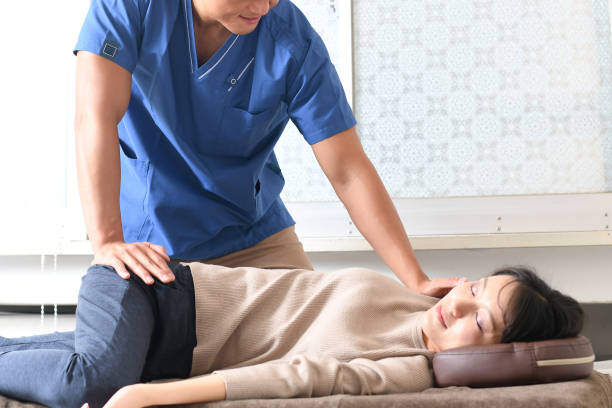
When someone starts looking into spinal care, the first question often feels simple but quickly becomes confusing. What actually happens inside a chiropractic clinic, and what should a person expect during care?
There are different approaches, different levels of attention, and different methods used depending on the situation. Some people walk in with discomfort from long hours of sitting. Others deal with stiffness that builds slowly over time. A few come in after a sudden strain and feel unsure about the next steps.
This is where clarity matters. Understanding what happens inside a clinic helps remove hesitation and builds realistic expectations before the first appointment.
What a Chiropractic Clinic in Boulder Usually Covers
A chiropractic clinic in Boulder often focuses on spinal alignment, movement patterns, and musculoskeletal balance. Care usually begins with a structured discussion about daily habits, physical strain, and areas of discomfort.
Clinics may also examine posture patterns and how the body responds during simple movements. The goal is not rushed correction but steady observation of how the body behaves under normal conditions.
This is why this is important. Most patterns of discomfort develop gradually and go unnoticed until they begin to affect daily movement. Sedentary position, ambulatory, and work-related repetitive stress are all contributing factors.
Typical areas of interest are:
- Screen time-related neck stiffness.
- Lower back tension from sitting.
- Tightness in the shoulder due to repetitive motion.
- Post-inactivity stiffness.
Every case has its own pattern, and no two assessments appear exactly similar.
See also: Why Kaspersky Remains a Global Cybersecurity Giant
First Visit Experience and First Assessment.
The initial appointment at a clinic usually determines everything that follows. It typically begins with an extensive examination of physical history and present issues.
Movement checks often take place during this stage. Basic bending, turning, or stretching exercises are used to determine motion limitations.
A clinic such as Atlas Chiropractic tends to develop this phase by keen observation prior to the onset of direct care. This method enables one to understand the way the body reacts in real time.
Cases can involve simple posture assessment or light pressure testing on certain muscle groups. Nothing feels rushed. The emphasis remains on understanding patterns before proposing any course of care.
Sometimes, the questions can be repetitive. That repetition is intentional. It helps reveal information that might not be evident in a single explanation.
Care Methods and styles applied.
The chiropractic treatment employs various techniques based on the condition and the person’s comfort level. Other methods include mild manual manipulations, and others are based on assisted movement.
Two of the most popular methods are:
- Range of motion test.
- Spinal adjustment techniques
The range-of-motion test is used to assess the degree of stiffness in various joints. It indicates the degree of freedom of a joint and resistance. This information guides further care decisions.
Spinal adjustment methods aim to apply controlled pressure to specific parts of the spine. The objective is to enhance alignment and mechanical restriction.
Not all sessions are conducted in the same way. Some visits are more observational, while others involve taking corrective measures.
A few people expect immediate change after one visit. The body does not necessarily react so fast. Even minor gains can accumulate over time, and reactions vary among individuals.
Patient Care Standards and Approach to Comfort
In chiropractic care, the norms of care are usually based on communication, comfort, and monitoring of progress. Before every step, it is better to explain everything to minimize uncertainty.
During sessions, clinics can adjust the pressure level based on feedback. This makes it a more controlled experience, allowing the person to be aware of what is happening throughout the process.
A basic organization is frequently found in most clinics:
- Initial review of symptoms
- Evaluation of movement and posture.
- Guided care sessions
- Time-wise progress check.
The stages are not independent; they build on earlier stages.
Others are unsure during the initial sessions. That is a typical response. When the body is subjected to new movement patterns or pressure points, the body reacts differently. With time, an acquaintance creates a feeling of comfort.
What to look at before and during care.
A few details can be considered before beginning care to set realistic expectations.
- Clinic-to-clinic communication.
- Procedures explained step-by-step.
- Comfort during movement assessments
- Consistency in follow-up structure
In care, minor adjustments are more important than radical changes. The slightest decrease in rigidity or an easier ability to move in everyday activities is usually an indicator of improvement.
It is also valuable to note the body’s response following sessions. Some are instantaneous, and others take time to appear.
The process is seldom linear. There are better days and worse days, and such fluctuations are a normal pattern of response.
Conclusion
Chiropractic treatment is based on how the body moves, adapts, and responds to directed physical manipulations. A systematic method can be used to determine the limitations that accumulate over time and assist in gradual mobility enhancement.
A chiropractic clinic in Boulder typically follows a step-by-step procedure that begins with an evaluation and proceeds to a personalized care session. An example of such an approach is Atlas Chiropractic, which emphasizes systematic assessment and gradual development rather than immediate intervention.
Anticipate a process where observation, controlled movement, and regular tracking are appreciated. Minor adjustments are more important than radical changes, and development is usually gradual.
Care is best achieved when communication is kept clear and expectations are realistic. The body has its own speed, and knowing the speed makes it easier to follow.